


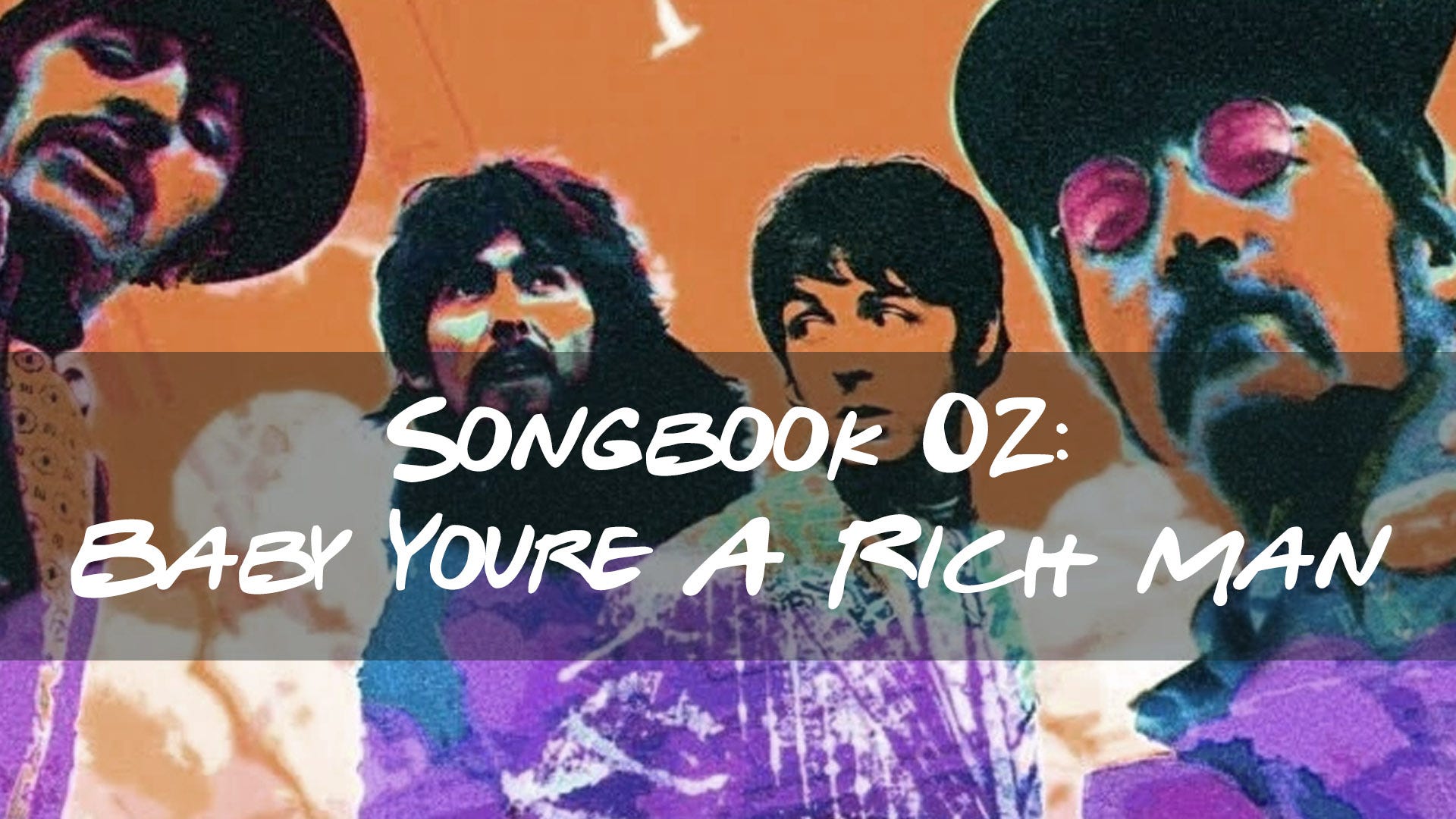
I am constantly in awe of the Beatles. You may or may not like their music. It isn’t for everyone. But what amazes me is what we might now call their “cheat code.”
John Lennon, Paul McCartney, and George Harrison knew one another as teenagers in Liverpool. Ringo Starr joined them later, and somehow these four British kids changed the landscape of popular music forever. And they did almost all of it in less than ten years. Think about that. The entire recorded arc of the Beatles, from “Love Me Do” to Abbey Road, happened in roughly the span of a decade.
Toward the second half of that decade, things started getting weird. The music became more experimental. The lyrics became stranger. The questions became bigger. And yes, drugs were involved. But something else was happening too. The Beatles were becoming increasingly interested in consciousness, Eastern philosophy, Indian spirituality, meditation, and enlightenment. You can hear that searching all over albums like Sgt. Pepper’s Lonely Hearts Club Band and Magical Mystery Tour.
Which is how we eventually arrive at a question tucked inside “Baby, You’re a Rich Man”:
How does it feel to be one of the beautiful people?
That’s an easy lyric to dismiss, maybe because most of us don’t think of ourselves as “the beautiful people.” The phrase sounds like it belongs to celebrities, wealthy people, important people, people with access and privilege. And coming from the Beatles, of all people, it would be easy to hear it that way.
But I was out walking recently when that lyric came through my headphones, and for whatever reason, I heard it differently. I heard it as an invitation. Maybe even a permission slip from God.
How does it feel to be one of the beautiful people?
What if this isn’t about celebrity at all? What if beauty is not something you achieve but something you inherit? What if John and Paul aren’t simply singing about themselves? What if they’re singing about you?
There is another question in the song that makes this even more interesting: Now that you know who you are, what do you want to be?
That order matters to me. First, know who you are. Then, what do you want to become?
So much of our lives reverse those questions. Become something, and then perhaps you will be worthy. Accomplish something, and then perhaps you will matter. Make yourself useful, attractive, successful, spiritual, healed, enlightened, productive, and then perhaps you can finally believe that you are good.
Many of us learned some version of this very early. Maybe it came from a parent. Maybe from religion. Maybe from school or culture or relationships. Maybe nobody ever said the words directly, but somehow the message made its way into our bodies: There is something wrong with you.
And here’s what I increasingly believe: that message did not come from God.
We may be able to accept that intellectually. It is much harder to allow it to become physically true. There is a difference between believing I am loved and having a body that knows it. There is a difference between understanding grace and living as though grace is actually true.
And perhaps this is where spiritual practice begins.
Becoming Re-Sourced
I’ve been dwelling lately on the word re-sourced. I mean it quite literally. To be re-sourced is to return to the Source.
Somewhere along the way, we drift. We begin sourcing our identity from achievement, other people’s approval, productivity, belonging, certainty, usefulness, appearance, success, or whatever else has taught us that we might finally become enough. It is the dangled carrot just out of our reach. Eventually we become exhausted because we are asking things that cannot give us life to become the source of our life.
Spiritual practice, then, becomes the work of returning. It is not about becoming someone else, manufacturing goodness, or achieving some higher spiritual status. It is a return to the Source of something that was already true.
But how do we actually do that?
I find road maps helpful, and lately I’ve been spending time with a very old one. The medieval mystic and theologian Bonaventure described the soul’s journey toward God through six ascending capacities. Drawing upon earlier Augustinian and medieval understandings of the soul, he names senses, imagination, reason, understanding, intelligence, and finally what he describes as the summit of the mind or the “spark” of awakening, our deepest orientation toward God and the Good.
What I love about Bonaventure’s map is where he begins:
The senses.
The journey toward God does not begin by escaping the body. It begins by paying attention. What do I see? What do I hear? What am I feeling? What is happening inside me right now?
From there we move into imagination, reason, understanding, deeper knowing, and eventually toward something beyond our ordinary ways of thinking. We move toward a place within us that remains oriented toward the Source. Bonaventure certainly wasn’t using my language of being “re-sourced,” but that’s what his map evokes for me. We begin with what is here and slowly find our way home.
And this brings me back to where we started.
Maybe You Are the Beautiful People
How does it feel to be one of the beautiful people? Not because you’ve earned your place among them or because you’ve finally become enlightened enough. Not because you’ve healed all your wounds, transcended all your patterns, or figured out how to become the person you think you’re supposed to be.
Maybe you are beautiful because you came from Beauty.
Maybe beneath everything you have learned to perform, protect, prove, and perfect, there remains something in you oriented toward the Good. Maybe the spiritual life is less about acquiring something we lack and more about continually returning to what we have forgotten.
This is what it means, at least for me, to become re-sourced. Again and again, we return to the Source until the truth we understand with our minds begins to find its way into our muscles, our breath, our relationships, our choices, and the way we inhabit the world. We return until there is new flesh on the bones, until the incarnate Spirit breathes life into us again, until being loved is no longer merely an idea we agree with but a reality from which we live.
So perhaps the question isn’t whether you qualify as one of the beautiful people. Perhaps the invitation is to notice what happens inside you when someone tells you that you already are.
How does it feel to be one of the beautiful people?
Stay there for a moment. Notice what happens in your body when you consider that this might actually be true. Not someday. Not after you have done enough work. But now.
And then we can return to the other question:
Now that you know who you are, what do you want to be?